

Credit: Francesco Ungaro / Unsplah
Coral reefs are critical to everyone. Losing them is not an option.
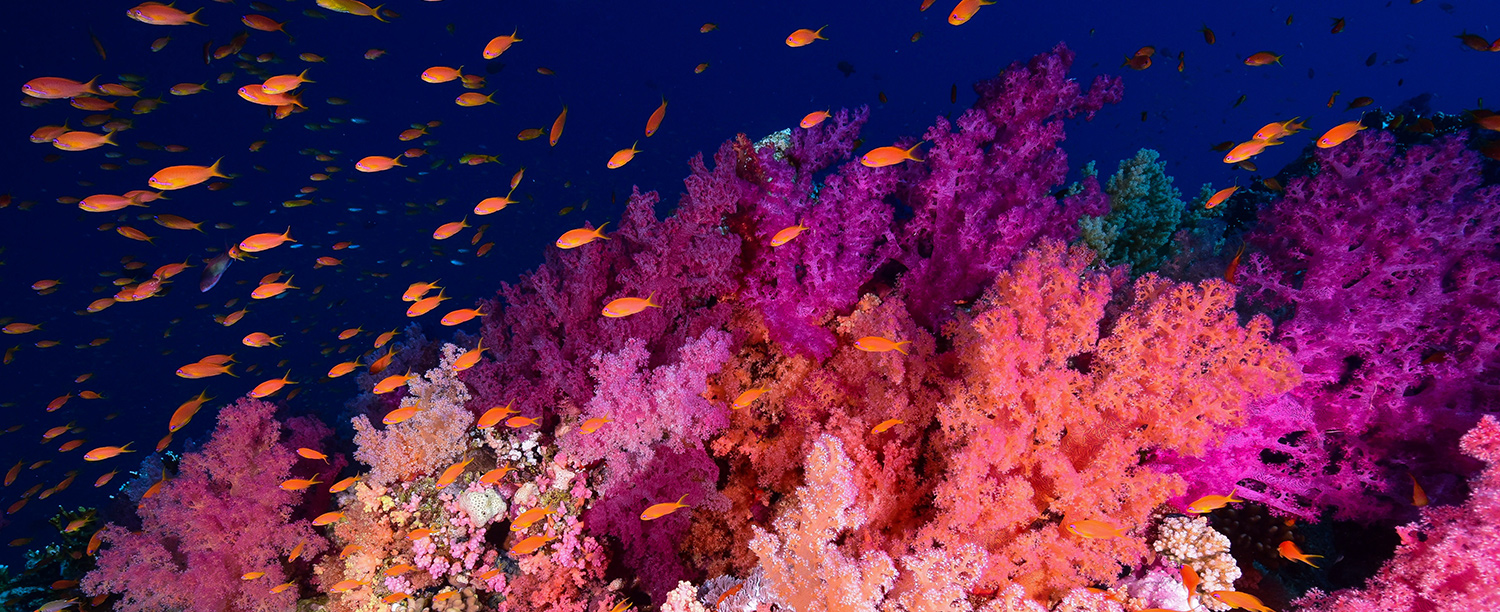
Coral reefs are underwater cities that teem with activity and support more than 30% of our planet’s marine species. Despite appearances, corals are not inanimate rocks. They are made up of living organisms, sometimes hundreds of thousands of tiny individuals called polyps, which group together to form the backbone of the reef ecosystem.
As small as they may be, corals and coral reefs have a profound influence on human lives, supporting biodiversity, livelihoods, food security, scientific research and coastal protection.
Corals exist in different forms and environments. Some build the hard structures associated with tropical coral reefs, while others create soft colonies or live in the deep, cold waters of the world’s oceans.
Together, these corals form complex habitats that support marine species and contribute to the health of ocean ecosystems.
Coral reefs are among the most valuable ecosystems on Earth, spanning more than 100 countries and territories.
They are vital to human wellbeing, providing food, medicine and economic opportunities, supporting livelihoods and offering coastal protection.
Our reefs directly benefit at least half a billion people around the world, providing ecosystem services that add up to at least USD 1 trillion per year.
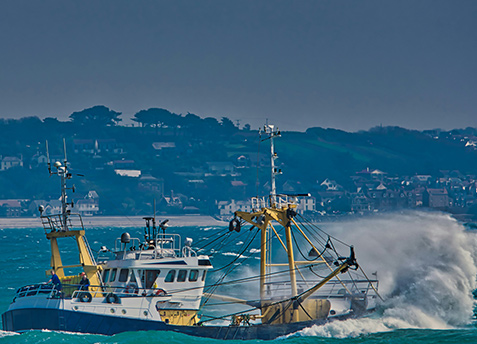
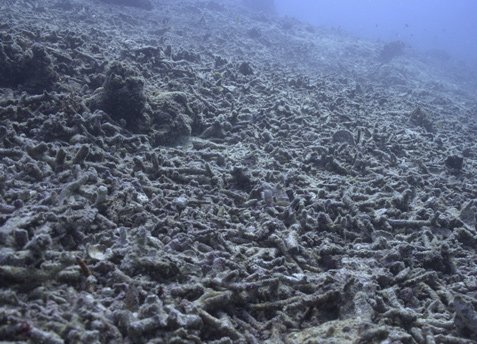
Human activity has already damaged or destroyed more than two-thirds of the world’s coral reefs, threatening one of our most valuable and vibrant ecosystems.
Without urgent intervention, scientists predict up to 90% of coral reefs could disappear by 2050 under a 1.5 °C warming scenario.
That threshold has already been exceeded, with the world currently on a trajectory towards 2 °C of warming. This could lead to the loss of 99% of coral reefs.
For the first time, humanity risks causing the collapse of an entire ecosystem, one that supports millions of species and sustains the lives and livelihoods of people around the world.
Credit: Cinzia Osele Bismarck / Ocean Image Bank
Credit: Lawrence Hookham
Credit: William Foster-Gundy
Credit: Meanwhile in San Diego
Credit: Antonio Busiello
Credit: NOAA
Credit: Xandro Vandewalle
Credit: Julie Bedford
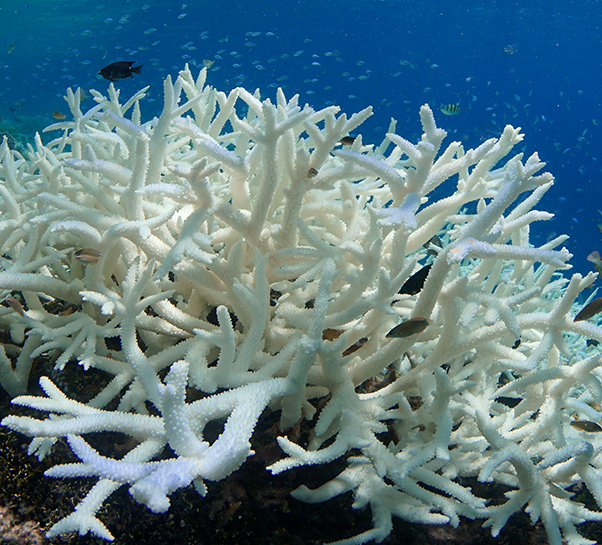
From January 2023 to mid 2025, tropical corals around the world suffered the worst mass coral bleaching event on record, triggered by increasing global sea surface temperatures due to greenhouse gas emissions.
This mass bleaching event affected at least 84% of the world’s reef areas, causing extensive coral loss in some regions.
The rising temperatures and increased ocean acidity dissolve the calcium carbonate skeletons of corals and affect the ability of corals’ symbiotic algae to create energy through photosynthesis.
The IUCN estimates that 44% (over 340 species) of warm-water reef-building corals are already at risk of extinction.
So the question is no longer whether reefs face global collapse, but whether we can act quickly and boldly enough to save them.
Credit: The Ocean Agency / Ocean Image Bank
Credit: AIMS / Marie Roman
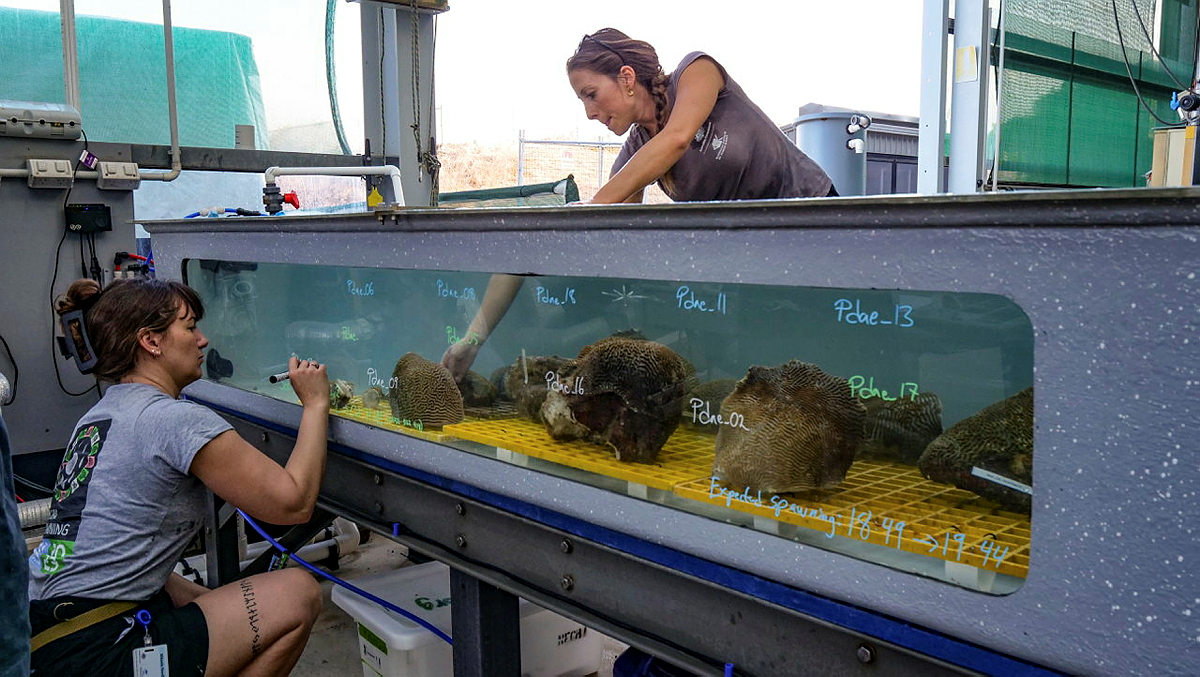
but the initiatives CORDAP is funding can help to tackle the growing crisis, while we search for stronger solutions.
From new technologies, including probiotics designed to improve coral resiliency, to conservation efforts, like blending artificial and natural reefs or employing sea urchins as bodyguards for baby corals, CORDAP is at the forefront of coral reef research.
We’re also committed to reducing the funding gap between the Global North and South, working with scientists and local communities in low- and middle-income countries, the nations most impacted by coral loss, to develop science-based solutions that suit their local contexts.
CORDAP is actively delivering a range of science-based solutions to protect and restore coral ecosystems.
Supporting this work can help strengthen research, innovation and collaboration, giving promising solutions the opportunity to be tested, improved and applied where they are needed most.
Credit: Noemi Merz / Ocean Image Bank
Intergovernmental Panel on Climate Change. 2022. Climate Change 2022: Impacts, Adaptation and Vulnerability. Contribution of Working Group II to the Sixth Assessment Report of the Intergovernmental Panel on Climate Change. Summary Volume.
International Union for Conservation of Nature. 2022. Coral Reefs and Climate Change.
International Union for Conservation of Nature. 2024. Over 40% of Coral Species Face Extinction, IUCN Red List.
Moberg, F. and Folke, C. 1999. Ecological Goods and Services of Coral Reef Ecosystems. Ecological Economics, 29(2), 215 to 233.
National Oceanic and Atmospheric Administration. 2019. What Are Corals?
Perry, C. T., de Bakker, D. M., Webb, A. E., et al. 2025. Reduced Atlantic Reef Growth Past 2°C Warming Amplifies Sea-Level Impacts. Nature, 646, 619 to 626.
Sack, K., and Kurukulasuriya, P. 2025. Why Coral Reefs Represent the Ultimate Climate Investment. World Economic Forum.
Souter, D., Planes, S., Wicquart, J., Logan, M., Obura, D., and Staub, F., editors. 2021. Status of Coral Reefs of the World: 2020 Report. Global Coral Reef Monitoring Network and International Coral Reef Initiative.
Thompson, J. 2018. Deep-Sea Corals. Smithsonian Ocean.