

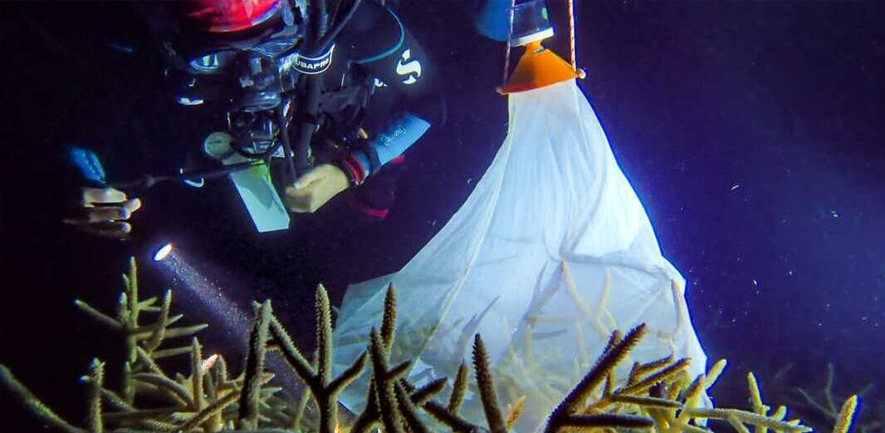
CORDAP awards USD 1.5 million to 16 breakthrough coral restoration projects
PRESS RELEASE, October 22nd, 2025
Amid the dramatic global decline of coral reefs and the direct consequences for coastal communities the G20 Coral Research and Development Accelerator Platform (CORDAP) announces its 2025 awardees: 16 research projects pushing coral science and restoration to the next level.
Designed specifically to empower researchers from low- and middle-income countries, CORDAP is investing USD 1.5 million in projects involving 63 researchers from 13 countries.
Coral reefs are critical not only for the thousands of species they support but also for the one billion people worldwide who depend on them for food, income, and coastal protection. Yet since early 2023, nearly 90% of the world’s reefs have been exposed to severe bleaching heat stress. Desperate times call for ingenious solutions and scientists are responding with creativity and determination.
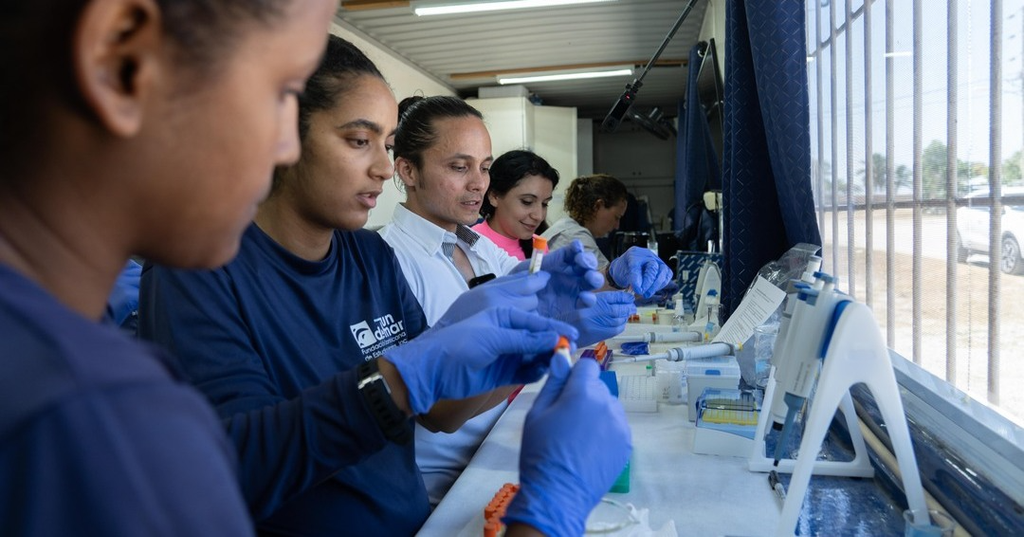
The team of researchers in the Dominican Republic process samples after returning from the field. Photo: FUNDEMAR
Some of the awarded projects:
Probiotics for corals
To avoid the imminent risk of extinction, a team of researchers will test for the first time the use of probiotics on Brazilian corals. Similarly, on the remote island of San Andrés, Colombia, another team aims to produce their own probiotics to fight a deadly, fast-spreading coral disease that has been decimating reefs.
Listening to corals to restore reefs
Healthy reefs are noisy reefs in the Galápagos, scientists will eavesdrop on coral reef soundscapes and play back the sounds of healthy reefs to lure baby corals into settling on degraded ones.
Citizen scientists will monitor coral spawning
In Indonesia, researchers will use cutting-edge tools to identify coral species simply by collecting water samples, and they will monitor coral spawning together with local communities.
The coral bodyguards
In Indonesia, researchers will use cutting-edge tools to identify coral species simply by collecting water samples, and they will monitor coral spawning together with local communities.
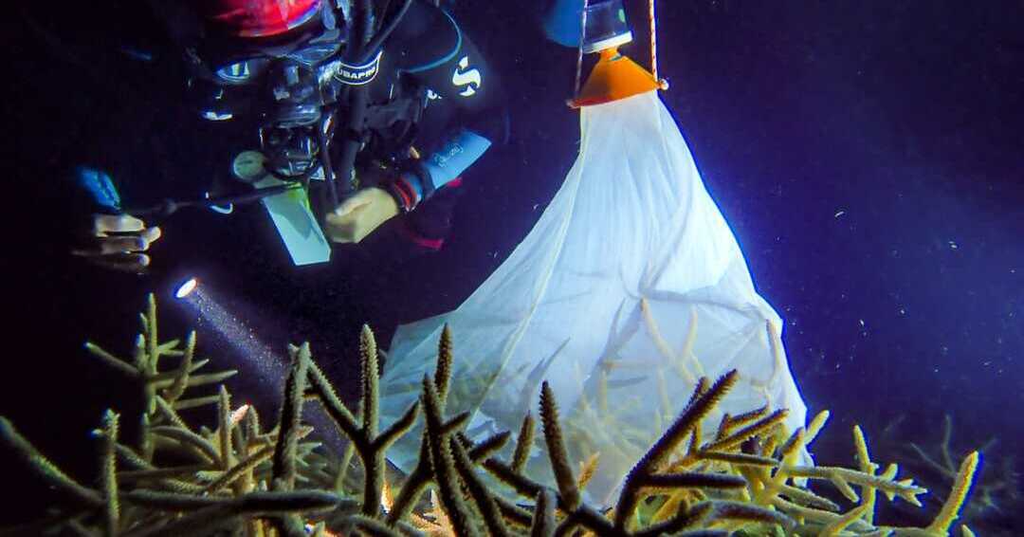
A researcher monitor coral spawning after placing a spawning net on top of a coral to collect its gametes. Photo: FUNDEMAR
Carlos Duarte, Executive Director of CORDAP explains why this funding is focused on low- and middle-income countries:
At CORDAP, we recognize that addressing the coral crisis requires a truly global effort, one that empowers researchers in the regions most affected by coral degradation. Low and middle-income countries face significant barriers to accessing the resources and funding needed to develop innovative solutions on coral research and restoration. We aim to reduce the existing gap between the Global North and Global South by providing critical funding to scientists and institutions in developing countries and ensure that global solutions are adapted to local contexts.“
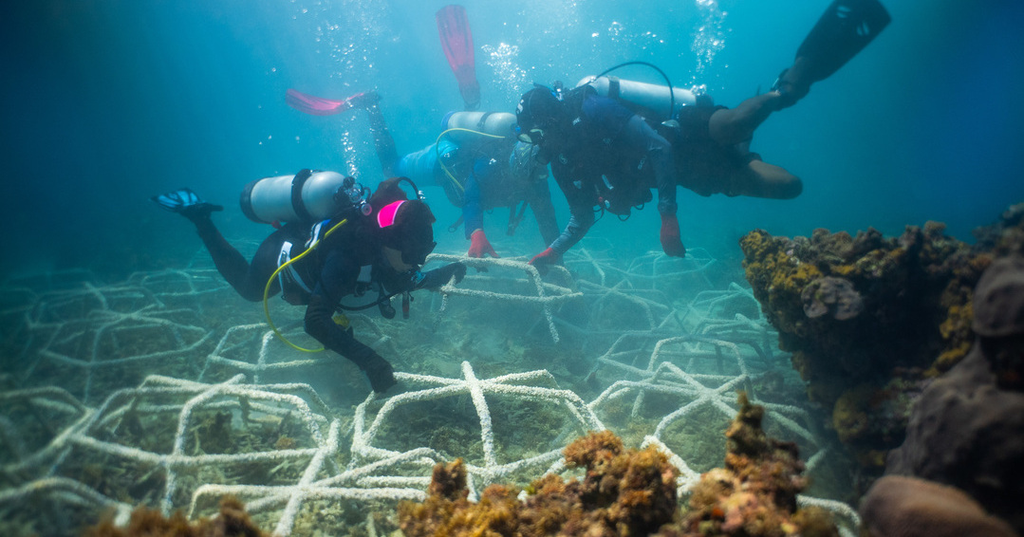
A team of researchers monitor artificial structures where coral will grow in Dominican water. Photo: FUNDEMAR
Each project will run for up to two years, with grants of up to USD 100,000. Together, they bring renewed hope that science can secure a future for the world’s corals.
About CORDAP:
The G20 Coral Research & Development Accelerator Platform – CORDAP – was launched in 2020 by the G20 to fast-track research and development (R&D) solutions to save the world’s corals. CORDAP brings together the best minds worldwide, in a transdisciplinary approach, to accelerate international research and development to supply the technologies and innovations required to secure a future for corals and reefs. Learn more: cordap.org
Media contact (CORDAP):
Carla Lourenco, Comms & PR Lead, [email protected]